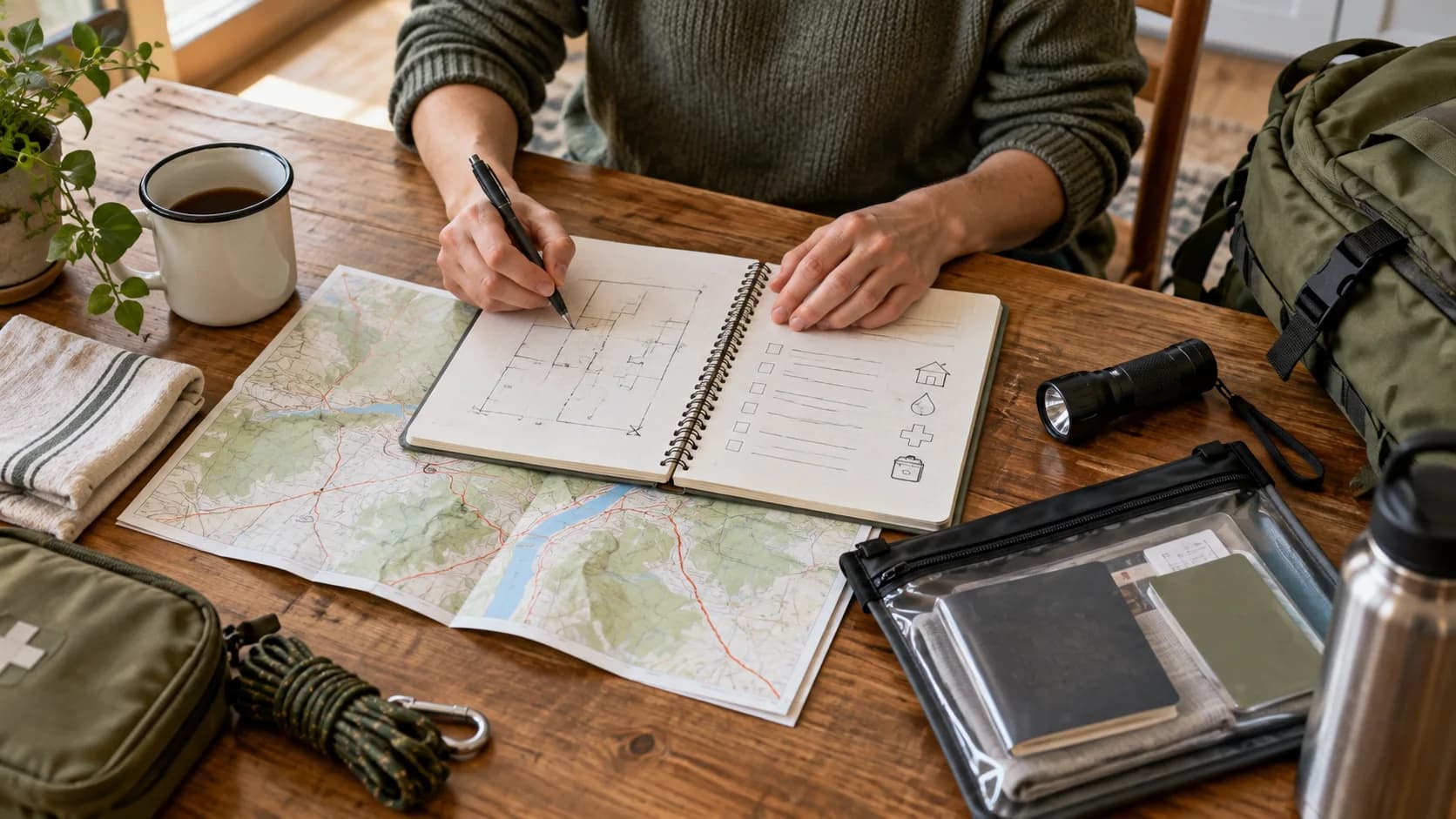
When something goes wrong, even familiar tasks can become difficult. You may be trying to reach someone, find a torch or decide whether it is safe to stay at home. An emergency plan puts useful decisions somewhere you can find them.
Start with the people in your household and a situation that could realistically affect you. Write a first version, talk it through and improve it as you discover what is missing.
Start with one scenario
Check the risks and official guidance for your area. Choose one situation to plan for first, such as a power cut or an evacuation. The American Red Cross planning guide recommends considering both emergencies that require staying put and those that require leaving.
Ask what that situation would change for your household. Would you lose your usual way to contact someone? Could you reach your supplies? Would anyone need help that you cannot provide without electricity?
These questions give the plan a purpose. A plan called “Household flood evacuation” is easier to write and use than one that tries to cover every emergency at once.
Write down the decisions that matter
Decide where you will get official updates and what instructions apply to the situation. Record the local emergency contacts relevant to your plan, rather than relying on a phone number from another country.
For evacuation, identify a destination and an alternative, plus how you could get there. Check what to do if the usual route is unavailable. Follow current official directions when an emergency happens; an old route saved in your plan may no longer be usable.
Do not delay an urgent departure to complete your checklist. If you are escaping a fire, leave belongings behind. The UK government's preparation guidance makes this distinction clear.
Agree how you will find each other
Your household may be at work, school or elsewhere when a problem starts. The Red Cross recommends meeting places and an out-of-area contact. Agree on a safe meeting point near home and another outside the neighbourhood if returning home is not possible.
Keep important contact details on paper as well as on phones. Ask the person you choose as your emergency contact whether they can take that role. Check the arrangements at schools, workplaces and care settings instead of assuming everyone will be released or collected in the same way.
Give the plan to the people who need it
Assign responsibilities that match each person's ability. Someone might carry the pet carrier, while someone else checks that a person needing assistance has their essential equipment. Agree who can take over if the usual helper is absent.
Include the details that make those tasks possible. “Take the medicines” is less useful than a note saying which medicines, where they are kept and what needs special storage. Keep sensitive information limited to what the person using the plan needs.
If you rely on powered medical equipment, make the contingency plan with your care team and equipment provider. The UK government's power-cut guidance specifically recommends arranging this before an outage.
Turn the plan into short actions
Group actions into phases that suit the scenario. In Survivalist, you can organise a plan into phases and give each phase individual steps.
Use clear verbs and include the information needed to act. Compare “Get organised” with “Find the torch in the kitchen drawer”. The second tells someone what to do without another conversation.
Keep the most urgent actions easy to find. Put background explanations after them, or in a separate guide, so they do not bury the steps you will need quickly.
A worked example: flood evacuation
This example assumes gradual water rise with at least four hours of warning. The household has already chosen an evacuation destination, an alternative and possible routes. It shows how a plan can cover the work between receiving a warning and reaching temporary shelter.
Follow current evacuation instructions promptly. Do not wait to finish a phase or protect belongings if that would delay a safe departure. This scenario does not apply to sudden flooding.
Phase 1: immediate assessment
- Monitor alerts. Check official weather alerts and flood warnings using the sources saved in the plan, with an emergency radio available if the usual connection fails.
- Check local conditions. Use official river or canal updates and observations from a safe place. Do not approach rising water to inspect it.
- Check family and pets. Confirm everyone is accounted for and identify who needs help getting ready to leave.
- Collect essential documents. Take the documents from the safe and put them in a waterproof pouch.
- Record the property's condition. Take photos for insurance purposes if this can be done safely without delaying departure.
Phase 2: preparation
- Move vehicles if needed. Move them to a safe place on higher ground where feasible, keeping the vehicle needed for evacuation accessible.
- Shut off utilities if safe. Follow the instructions recorded for the property's gas, electricity and water supplies. Never touch electrical switches while standing in water.
- Protect priority belongings. Move selected valuables upstairs if there is time. Skip this task if it could delay leaving safely.
- Check the go-bags. Use the saved packing list to check the bags, including essential medicines and supplies for pets. Keep them ready by the exit.
- Prepare drinking water. Fill clean drinking-water containers while the tap supply is confirmed safe to drink.
- Charge devices. Charge phones and power banks while other preparations are underway. Take them when leaving, even if charging is incomplete.
Phase 3: evacuation
- Load and leave. Help family members into the vehicle, secure pets for travel and load the essential bags. Check that everyone is accounted for before departure.
- Travel to the agreed destination. Check current official route advice and use the alternative if the planned route is unavailable and the alternative remains safe. Never walk or drive through floodwater.
- Set up temporary shelter. If the destination is a campsite, confirm that it is open, permits your stay and is suitable for the current conditions before pitching the tent. Use the agreed alternative accommodation if camping is unsuitable. Let your emergency contact know you have arrived.
The UK government's flood guidance supports the safety precautions used here. For a camping destination, the National Park Service's campsite guide explains the checks to make before setting up.
The value is in the details you add to each step: where the documents are kept, which belongings matter, what goes in the bags and where you are going. In Survivalist, those details sit alongside the actions in each phase, so you can follow your own preparations without rebuilding the checklist under pressure.
Try the plan while things are calm
Talk through the plan with the people who will use it. The Red Cross recommends practising it too.
Try finding the supplies or walking an evacuation route when it is safe to do so. Ask someone else to follow a step without your explanation. If they cannot find an item or understand an instruction, change the plan.
Review it when household needs, contacts or routes change. Add a review date so you know how current it is. Connect it to your home supply kit and go-bag rather than keeping separate lists that disagree.
Keep it available with Survivalist
Create a plan for your chosen scenario and organise its actions into phases. Saved plans are available offline, and Emergency Mode provides a focused view for following the steps.
With Pro, you can share an encrypted plan file with trusted contacts. Make sure they can open it and know which version to use. Shared files need to be sent again when you update them; they are not a live source of emergency alerts. Keep essential contacts and meeting points on paper too.
Start today: choose one scenario and write the first action someone in your household would need to take.
Sources
Guidance checked on 10 October 2026. Follow your local emergency authorities and the instructions relevant to your situation.